




























Renewed Clash Between White House and Federal Reserve Raises Questions About US Economic Policymaking
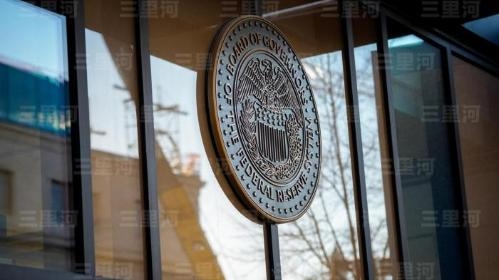
The ongoing tension between the White House and the Federal Reserve has sparked fresh concerns about the stability of US economic policymaking. The central bank is facing intense political pressure, and the uncertainty surrounding the successor to Federal Reserve Chair Jerome Powell has added to the complexity of the situation. A recent criminal investigation into Powell, focusing on the renovation of the Federal Reserve’s headquarters and his previous statements to Congress, has been dismissed by Powell as a pretext. He claims that the real reason behind the investigation is the Fed’s refusal to set interest rates in line with the president’s preferences.
Battle for the Next Fed Chair
The battle for the next Fed chair is gaining attention, with several contenders emerging. White House economic adviser Kevin Hassett is widely viewed as a leading candidate, thanks to his close ties with President Donald Trump and his policy views, which align with the White House. However, critics argue that Hassett’s close relationship with the president and his history of criticizing the Federal Reserve make him unqualified to lead an independent central bank. Some figures on Wall Street are instead lobbying for Kevin Warsh, a former Fed governor and Morgan Stanley banker, who is seen as a more independent option.
A Third Contender Emerges
A third contender, Federal Reserve Governor Christopher Waller, has quietly emerged as a potential candidate. Waller is seen as having fewer political connections than the other two contenders, which has earned him greater acceptance on Wall Street. At the same time, his stance on rate cuts and support for institutional reform partially align with Washington’s policy demands. The core divide between Wall Street and Washington lies in whether the Federal Reserve should maintain its independence or become more politicized. According to Liu Ying, a researcher at the Chongyang Institute for Financial Studies, the former prioritizes predictability and institutional stability, while the latter wants monetary policy to serve fiscal goals and political considerations.
Economic Uncertainty in the United States
The concerns over the Fed’s role come as economic uncertainty in the United States continues to build. The US unemployment rate has reached a four-year high, and inflation, compounded by tariffs, has driven up healthcare, energy, and housing costs, squeezing household spending. Consumer confidence has declined for five consecutive months, according to Bloomberg. The US government debt has also reached its highest level in peacetime history, raising concerns that any loss of global confidence in US regulatory institutions could amplify financial risks. Nobel laureate Paul Krugman has warned that US economic data are already weak enough to cause serious concern that “a recession is coming.”
Implications of a Politicized Federal Reserve
The potential erosion of the Federal Reserve’s independence could have significant implications for the US and global financial markets. Liu Ying warned that the stark differences among the three candidates in political positioning and market credibility highlight the structural tension facing the Fed’s independence. A politicized Federal Reserve could trigger sharp shifts in capital flows, heightened exchange-rate volatility, and broader instability in US and global financial markets. Bank of America CEO Brian Moynihan has cautioned against excessive fixation on interest rate policy, arguing that if the economy is seen as functioning only through rate hikes or cuts, it suggests deeper structural problems.
Conclusion
The contest for the next Fed chair will eventually be decided, but the greater test may lie beyond personalities. The question is whether Washington and Wall Street can confront the mounting pressures facing the US economy and ordinary Americans, and how those challenges will ultimately be addressed. The stability of US economic policymaking and the independence of the Federal Reserve are crucial to maintaining predictability and institutional stability in the US and global financial markets. As the situation continues to unfold, it is essential to monitor the developments and their potential implications for the US and global economies.