
































Introduction to the Shift in Technical Talent Valuation
As we step into 2026, a significant structural shift is emerging in how technical talent is valued and deployed across organizations. The traditional roles of software engineers, although still crucial in product development, are experiencing a slowdown in growth. This is largely due to the increasing adoption of automation, low-code platforms, and AI-assisted development, which are reducing the need for large teams focused on routine implementation tasks. In contrast, the demand for professionals with expertise in machine learning and AI is accelerating, as companies invest heavily in intelligent systems that directly influence decision-making, efficiency, and long-term competitiveness.
The Rising Demand for Machine Learning and AI Professionals
This divergence in demand is reshaping career trajectories across the technology sector. Experienced software engineers, data professionals, and technical specialists are reassessing their skill sets as organizations prioritize roles that contribute directly to business outcomes rather than pure execution. Professionals capable of building and operating intelligent systems, such as machine learning engineers and AI engineers, are now viewed as central to product strategy, risk management, and operational scale. The industry is witnessing an expansion in investments in predictive analytics, recommendation systems, fraud detection, and conversational AI across various sectors, including healthcare, financial services, e-commerce, cybersecurity, and enterprise software.
The Skills Gap in AI and Machine Learning
The current hiring landscape reflects this transition, with recruiting pipelines for machine learning and AI engineering positions remaining active, despite the competitiveness in general backend or frontend roles. However, there’s a growing imbalance that highlights a significant skills gap. While AI tools are widely used to accelerate coding and analysis, few professionals are trained to design the models, pipelines, and evaluation frameworks that power these systems. Employers are increasingly looking for candidates who can move beyond surface-level API usage and take full ownership of AI-powered systems in production environments.
Changing Structure of Engineering Teams
Another factor driving this demand is the changing structure of engineering teams. Automation has reduced the need for large junior teams focused on repetitive tasks such as data preparation, feature generation, or basic model training. These responsibilities are now handled by automated pipelines or agent-based tools, leading to smaller, more senior teams that place greater emphasis on professionals who can architect systems, select appropriate models, monitor performance, and manage reliability, compliance, and ethical considerations.
Bridging the Gap with Education and Training
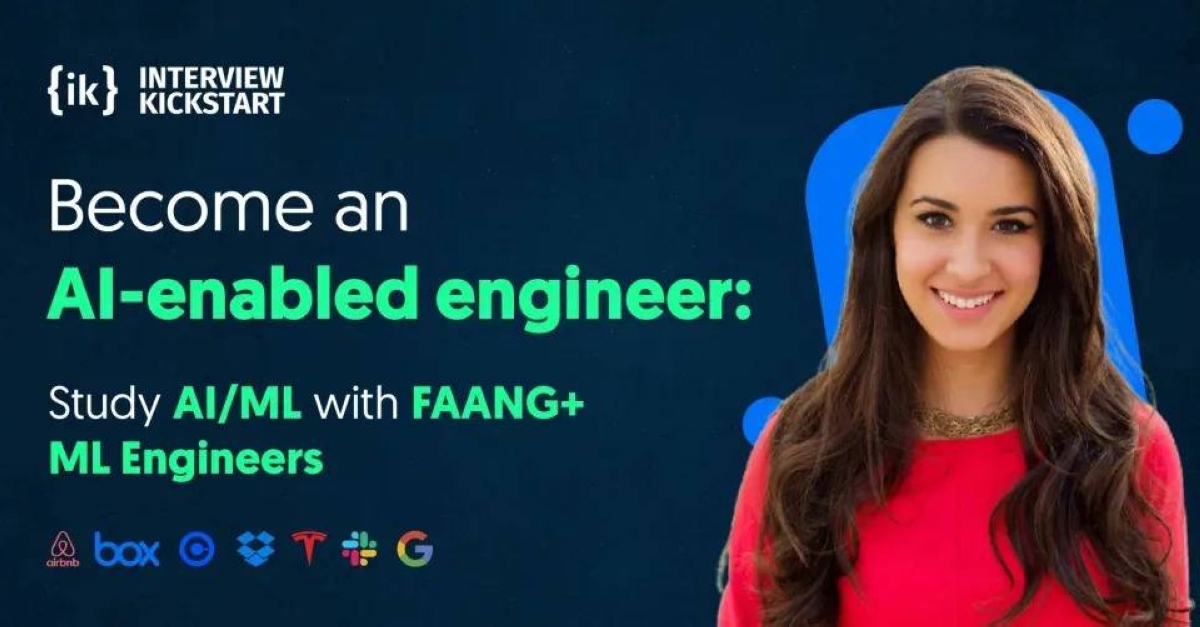
In response to these market dynamics, educational programs like Interview Kickstart’s EdgeUP and Advanced Machine Learning Program with Agentic AI have been introduced. These programs are designed for professionals with existing experience in programming, engineering, or quantitative disciplines who want to transition into applied machine learning and AI engineering roles. The curriculum emphasizes production-grade skills, reflecting how AI systems are built and deployed inside companies today, including core Python programming, data handling, machine learning algorithms, deep learning, and modern generative AI workflows.
Project-Based Learning and Real-World Applications
A defining element of these programs is their project-based structure, where participants complete hands-on projects modeled on real business scenarios across industries such as retail, healthcare, and cybersecurity. This includes building recommendation engines, designing retrieval-augmented generation systems, automating decision workflows, and deploying models using MLOps practices. By the end of the program, learners have a portfolio that demonstrates applied problem-solving capability, not just conceptual knowledge. Instruction is delivered through live classes, guided labs, and mentorship from practitioners with experience building AI systems in production, providing insight into how AI systems are designed, reviewed, and evaluated in real hiring environments.
Future Prospects and Career Resilience
The need for engineers who can build, manage, and govern intelligent systems is expected to grow steadily as organizations continue to embed AI into core operations. By combining software engineering experience with machine learning and agentic AI capabilities, professionals can position themselves for more resilient and higher-impact careers in the years ahead. The future of work in the tech industry is rapidly evolving, with AI and machine learning at the forefront of this change. As we move forward, it’s essential for professionals to adapt and acquire the skills necessary to thrive in this new landscape.