































Introduction to the China Conundrum
The United States has long grappled with the complexities of its relationship with China, oscillating between economic engagement and strategic confrontation. This delicate dance was perhaps most evident in 1993 when President Bill Clinton attempted to leverage economic influence to push for human rights improvements in China. By conditioning China’s “most favored nation” trading status on human rights progress, Clinton aimed to use economic carrots and sticks to effect political change. However, this strategy ultimately backfired, with China largely ignoring Washington’s conditions and the U.S. eventually granting unconditional renewal of China’s trading status in 1994.
A History of Accommodation
This early failure set the stage for a policy of accommodation, where successive American administrations sought to align China with U.S. interests by integrating it into the global economic system. The decision to support China’s accession to the World Trade Organization (WTO) in 2001 and grant permanent normal trade relations in 2002 exemplified this approach. The underlying logic was that by embedding China in the global economy, it would become a responsible stakeholder, adhering to international norms and rules. However, this strategy has proven remarkably durable, even as China’s economic power has grown exponentially, and its ambitions have become increasingly at odds with U.S. interests.
The Illusion of Engagement
The October 2025 summit between U.S. President Donald Trump and Chinese leader Xi Jinping in Busan, South Korea, highlighted the ongoing illusion of engagement. Despite Trump’s initial tough stance, including threats of sweeping software export controls, the meeting concluded with a fragile truce that heavily favored Beijing. This outcome was not surprising, given China’s history of exploiting American overtures and toggling between conciliatory rhetoric and threats of retaliation to shift the burden of stabilizing ties onto Washington.
China’s Strategic Intentions
Xi Jinping’s declarations at the 20th Party Congress in October 2022 left little doubt about China’s strategic intentions: to become the world leader in terms of composite national strength and international influence by the middle of the century. This goal is underpinned by a drive for industrial modernization, with a focus on advanced manufacturing and the exploitation of artificial intelligence (AI) to sustain economic growth and build national power. The CCP views advanced manufacturing as “the main battlefield” in the contest for global dominance, and its latest five-year plan reflects this prioritization, with directives aimed at further insulating its economy from external pressure while expanding its coercive capacity.
Reordering the Global Trade System
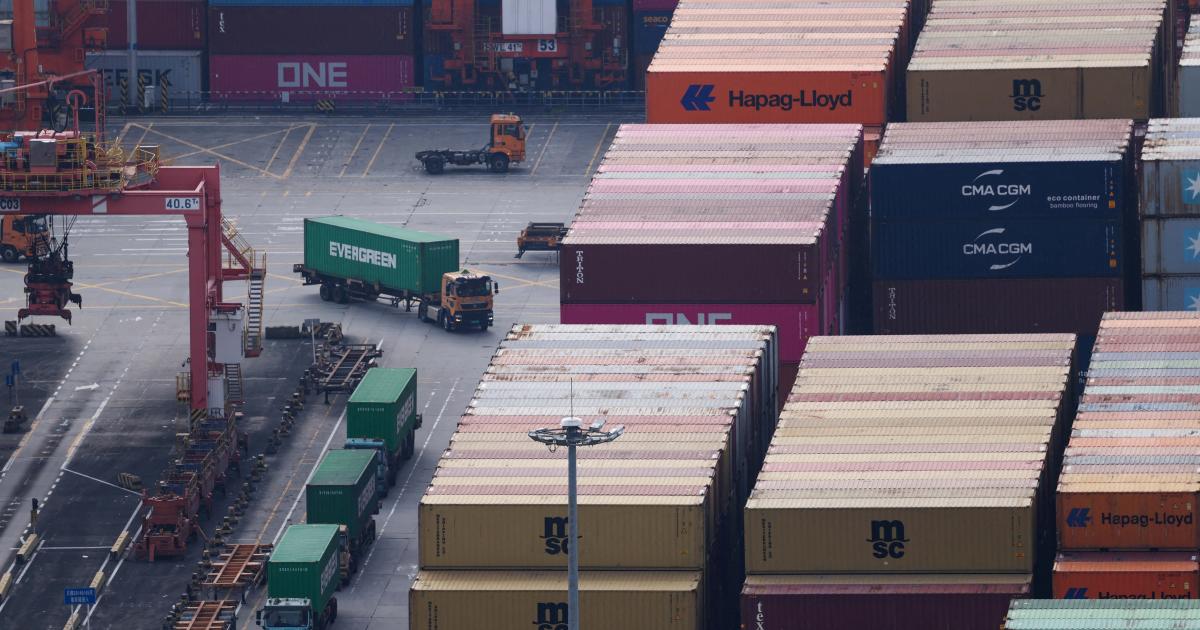
Countering Beijing’s ambitions requires a fundamental reordering of the global trade system, recognizing that the post-Bretton Woods consensus has failed to evolve to meet the times. The U.S. must accelerate trade realignment away from China, strengthening its economic and technological advantages. This includes expanding export controls on advanced semiconductors, working with allies to close loopholes, and reducing reliance on Chinese-controlled supply chains for critical minerals. U.S. Trade Representative Jamieson Greer’s efforts to renegotiate trade flows with Southeast Asia and establish economic security agreements are steps in the right direction, aiming to create a new order where trade partners receive preferential access to the U.S. market in exchange for reduced dependence on China.
Strengthening North America as a Production Base
Greer’s strategy also emphasizes strengthening North America as a production base capable of competing with China. This involves consolidating the U.S.-Mexico-Canada Agreement, treating it as the foundation of a shared industrial strategy rather than merely an arrangement for market access. By strengthening rules of origin, aligning investment incentives, and coordinating tariffs and restrictions on Chinese imports, the bloc can prevent dumping and backdoor access through North American production channels. Over time, this bloc can expand to include additional partners, building an insulated supply chain network.
The Chip Gap and AI Supremacy
The decision to license exports of Nvidia’s H200 chips to China is a critical mistake, contradicting the logic of the administration’s own National Security Strategy and AI Action Plan. Allowing sales of cutting-edge AI chips to China hastens a future where the AI revolution bears a “Made in China” stamp, undermining U.S. and allied leadership in chip design, manufacturing, and cloud infrastructure. This is a potent source of technology leverage that the U.S. cannot afford to relinquish.
Operation Mineral Security
Even successful trade realignment and export controls will fall short if the U.S. remains dependent on China for raw materials, particularly rare earths. The Trump administration’s recent moves to secure supply chains of critical minerals and rare-earth magnets are a start, but these efforts must be implemented at scale. An “Operation Mineral Security” could compress the timeline for building resilient rare-earth supply chains, using diversified investment, proactive financing, and public-private coordination. This strategy requires strategic stockpiles of rare earths, long-term offtake agreements, public financing, and subsidies to support firms at risk of retaliation.
Conclusion: Breaking the Cycle of Exploitation
The dilemma that confronted Clinton in 1993 remains: tactical concessions cannot buy durable cooperation with a communist dictatorship. Instead, they invite exploitation. Stability with Beijing is a fantasy. Breaking this cycle requires building leverage and resilience that China cannot switch off at will. The U.S. must apply existing policy tools more effectively, accelerate global trade realignment, strengthen leadership in AI, and reduce reliance on Chinese-controlled supply chains. Only through such a comprehensive approach can the U.S. position itself for a future where it is not beholden to China’s whims, ensuring a more secure and prosperous tomorrow.