
































India on the Cusp of a Medical Revolution
India is poised to undergo a significant transformation in the field of medicine, driven by the convergence of artificial intelligence (AI), predictive genomics, advanced biologics, and cell and gene therapies. According to Mettu Madan Mohan Reddy, whole-time director of Aurobindo Pharma, this shift is not only expected to revolutionize healthcare but also position India as a leader in innovation. Reddy emphasized that while India has long been recognized as a major supplier of affordable medicines, it is now ready to move beyond manufacturing and play a more significant role in driving innovation.
A New Era of Innovation
The COVID-19 pandemic has highlighted the importance of global cooperation in healthcare, and India has played a vital role in supplying medicines to countries around the world. However, Reddy believes that India’s responsibility extends beyond just participating in global innovation; it must also influence the direction of innovation by developing therapies that are not only advanced but also affordable and scalable. This approach will enable India to make a more meaningful impact on global healthcare and ensure that progress is equitable and accessible to all.
The Future of Healthcare
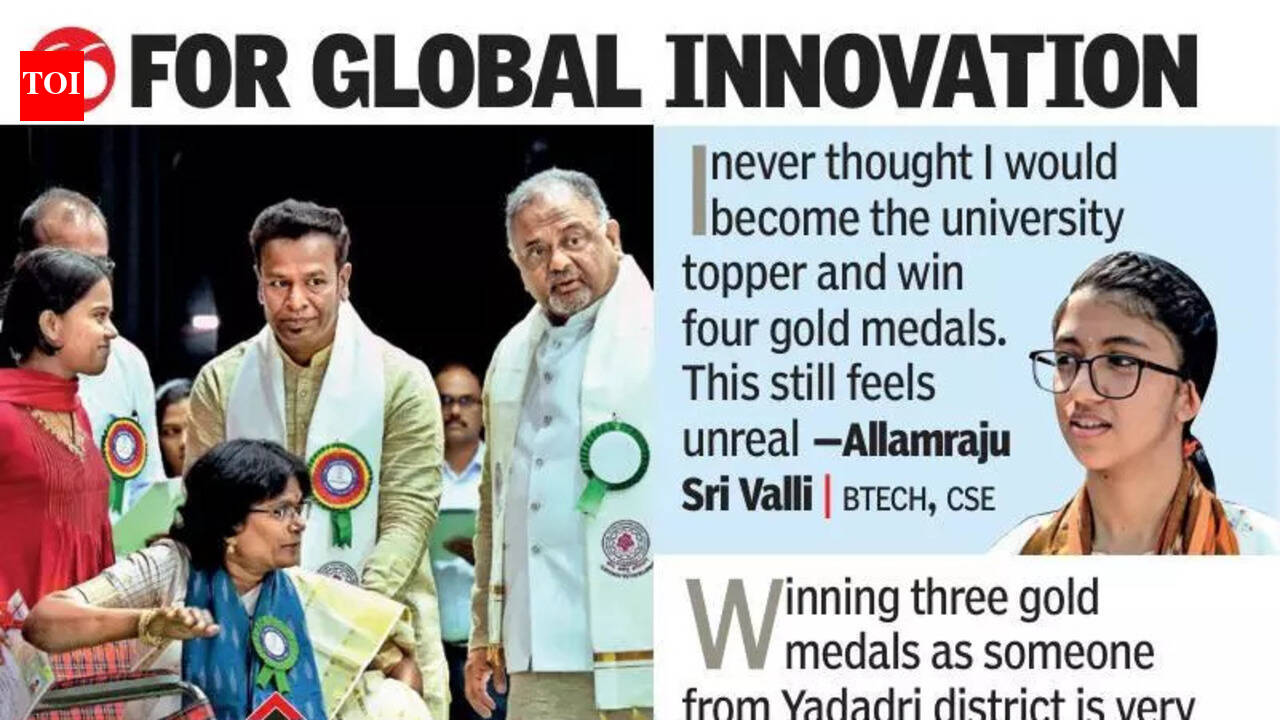
The XIV Convocation of Jawaharlal Nehru Technological University Hyderabad (JNTUH) provided a platform for Reddy to share his vision for the future of healthcare. He noted that innovation carries a human responsibility and that scientists, technologists, and healthcare professionals must work together to develop solutions that benefit humanity. In recognition of his contributions to science, technology, and the pharmaceutical sector, Reddy was conferred an Honorary Doctorate by the university.
Empowering the Next Generation
The convocation ceremony saw a total of 82,547 students awarded degrees, with women students dominating the honors list. They secured 59 of the 71 gold medals awarded across disciplines, highlighting their strong academic performance. The university’s implementation of the R25 curriculum, which aligns academics with emerging areas such as AI, machine learning, cybersecurity, and blockchain, is expected to equip students with the skills required to drive innovation in these fields.
Academic Excellence and Innovation
Vice-chancellor T Kishen Kumar Reddy highlighted the university’s efforts to foster innovation and entrepreneurship. The university has incubated 23 deep-tech start-ups in areas such as AI, blockchain, healthcare, and urban mobility, and established eight new research centers. The university has also strengthened national and international collaborations, including MoUs with institutions in Germany, Sweden, and Japan. These initiatives are expected to provide students with opportunities to engage with industry experts, work on real-world projects, and develop innovative solutions to pressing problems.
Real-World Implications
The convergence of AI, predictive genomics, advanced biologics, and cell and gene therapies is expected to have a significant impact on healthcare. These technologies have the potential to enable early disease diagnosis, personalized medicine, and targeted therapies. However, they also raise important questions about accessibility, affordability, and equity. As India moves forward in this area, it is essential to ensure that innovation is inclusive and benefits all sections of society.
Conclusion
India’s emergence as a leader in medical innovation is a significant development with far-reaching implications. As the country continues to invest in AI, predictive genomics, advanced biologics, and cell and gene therapies, it is essential to ensure that innovation is equitable, accessible, and scalable. By doing so, India can make a meaningful impact on global healthcare and improve the lives of millions of people around the world. The future of healthcare is exciting, and India is well-positioned to play a leading role in shaping it.