
























![Science and ICT Minister Bae Kyung-hoon, right, speaks during a public briefing at the National Science Museum in Daejeon on Nov. 7, 2025. [JOINT PRESS CORPS]](https://parsonsis.com/wp-content/uploads/2026/01/AI-Watermarks-Now-Mandatory.jpg "AI Watermarks Now Mandatory")
Introduction to AI Regulation: A New Era for Korea
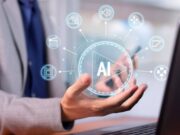
Korea has taken a significant step forward in regulating artificial intelligence (AI) by enforcing the world’s first comprehensive law governing AI. The AI Basic Act, which came into effect on November 7, 2025, requires watermarks on images, videos, and audio created and distributed using generative AI. This move aims to promote transparency and trustworthiness in AI-generated content. However, concerns remain about the law’s effectiveness and potential impact on domestic AI companies.
Watermarking AI-Generated Content
The law requires businesses to label AI-generated content with visible or invisible digital watermarks, depending on the type of content. For instance, animation or webcomics can use invisible watermarks, while deepfake content that closely resembles real people or events must display a clear and visible watermark. This provision applies only to businesses, not individual users. The goal is to prevent the spread of misleading or deceptive content and ensure that users are aware of the origin of the content they consume.
Challenges in Enforcement
Despite the law’s good intentions, enforcement remains a significant challenge. A substantial portion of deepfake content circulating online is created using overseas apps that fall outside the law’s jurisdiction. The legislation includes a provision requiring foreign technology companies to appoint a local representative in Korea, but this applies only to firms that meet specific revenue or user thresholds, limiting its scope to companies like Google and OpenAI. Moreover, watermarks themselves are easy to remove, with numerous online tools and apps available that can delete watermarks with just a few clicks.
The Spread of AI Slop
Another concern is the spread of “AI slop,” a term used to describe low-quality or deceptive content mass-produced using generative AI. According to a video-editing platform, 11 Korea-based AI slop channels ranked among the top 100 YouTube channels by total views worldwide, with a combined 8.45 billion views. The law has done little to address this issue, and experts argue that regulating platforms is key to dealing with AI slop. However, concerns about friction with the U.S. government may have limited the law’s scope.
Industry Concerns and Implications
Industry groups have voiced unease that the law could disproportionately affect domestic firms, placing additional burdens on Korean companies. A survey found that only 2% of 101 Korean AI startups had established a substantive compliance system to respond to the new law. Experts argue that this could lead to reverse discrimination, where Korean companies are held to a higher standard than their less-regulated U.S. and Chinese counterparts. The government has sought to reassure industry, stating that they will not impose fines during a grace period of up to one year as the law takes effect.
Future Prospects and Global Implications
The AI Basic Act is a significant step towards regulating AI, but its effectiveness and implications will be closely watched. As the world’s first comprehensive AI law, it sets a precedent for other countries to follow. However, the law’s limitations and challenges highlight the need for ongoing evaluation and refinement. The government’s emphasis on promoting the AI industry while ensuring trustworthiness is a delicate balance to strike. As AI continues to evolve and permeate various aspects of our lives, it is essential to address the concerns and challenges surrounding its development and deployment. The future of AI regulation will likely involve a combination of technological innovation, regulatory frameworks, and international cooperation to ensure that the benefits of AI are realized while minimizing its risks.