

































Understanding the Current Stock Market: A Deep Dive into Sector Rotation
The U.S. equity market is sending a clear message: this is a capital rotation market, not a random stock-picking environment. As investors and traders prepare for the market open, it’s essential to understand the dynamics at play. By analyzing premarket trading volume, relative strength, and sector-level flows, a pattern emerges. Money is not leaving equities altogether; instead, it’s moving aggressively from one pocket of the market to another.
What’s Driving the Rotation?
To grasp the current market situation, it’s crucial to examine two critical lenses: premarket price action, volume, and earnings reactions, as well as broader January sector rotation data. This information provides valuable insights into where institutional capital is positioning and how to navigate the market.
Executive Overview: Rotation, Not Panic
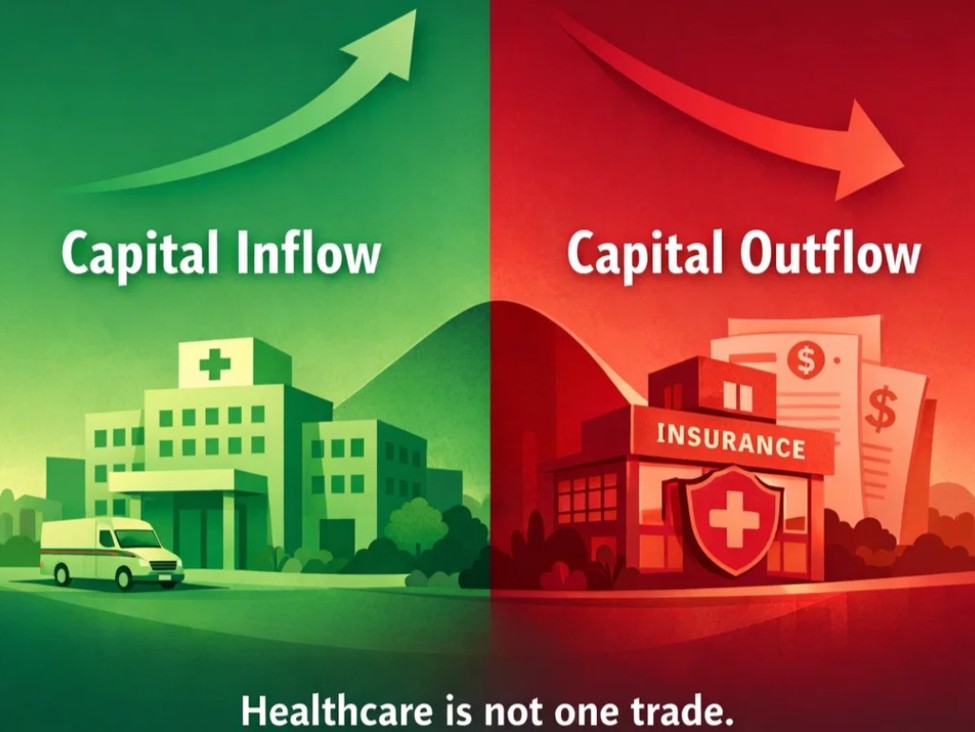
Despite significant declines in certain high-profile names, the broader market structure remains constructive. The key insight is that capital is exiting specific subsectors under regulatory or margin pressure, while flowing into growth-oriented and cyclically sensitive areas. This rotation is evident in the healthcare sector, where providers and hospitals are attracting buyers, while healthcare insurers are experiencing heavy selling pressure.
Healthcare: A Tale of Two Subsectors
The healthcare sector is often viewed as a single entity, but it comprises multiple business models that respond differently to policy, rates, and regulation. The current rotation within healthcare is a prime example of this. Hospitals are benefiting from earnings strength and relative insulation from regulatory shock, while insurers are facing a sharp repricing following regulatory updates tied to Medicare Advantage reimbursement.
Technology and Semiconductors: A Source of Stability
While healthcare insurers are absorbing selling pressure, technology is quietly doing its job as a market stabilizer. Semiconductors, in particular, are leading the pack, with strong interest in chipmakers like Intel, Micron Technology, and Nvidia. This is consistent with January sector data showing technology funds and ETFs receiving inflows, even as investors rotate within the sector rather than abandoning it.
Semiconductors: A Value-Driven Rebound
The move in Intel’s stock is especially instructive, as buyers are expressing a value-driven rebound thesis, not momentum chasing. This is a key distinction, as it highlights the importance of understanding the underlying drivers of sector rotation.
How This Fits the Bigger Sector Rotation Picture
January rotation data points to two broader trends: industrials and financials are heating up, supported by flows and narrative alignment, while crowded growth trades are being selectively trimmed, not abandoned. Industrials benefit when investors expect ongoing infrastructure investment, stabilizing economic activity, and intact capex cycles. Financials benefit from a favorable interest rate environment and economic growth.
Education Corner: Understanding Sector Rotation
Sector rotation describes the process by which investors move capital between different areas of the market based on economic expectations, earnings visibility, interest rate outlook, regulatory changes, and valuation extremes. This rotation often happens before it becomes obvious in headlines, making it essential to stay informed and adaptable.
A Quick Word on ETFs
An ETF, or Exchange Traded Fund, is a basket of stocks that trades like a single share. When investors buy or sell ETFs, they are moving capital across entire sectors at once, not just individual stocks. This is why ETF flows are a powerful signal for rotation analysis.
Is It Too Late to Enter When Rotation Is Visible?
The answer is nuanced. Early rotation favors institutional positioning and relative value, while mid-rotation often offers the best risk-reward for swing traders. Late rotation is where momentum chasers usually get hurt. Currently, many of these moves appear to be in the early to mid-phase, especially in healthcare and technology.
What to Watch During the Session
Key things investors and traders should monitor include: does selling pressure in insurers stabilize or accelerate? Do hospitals hold gains after the open? Does semiconductor strength broaden or fade? Are industrial and financial ETFs seeing follow-through volume? Rotation only remains healthy if leadership holds and broad participation expands.
Bottom Line for the Stock Market Today
This market is not about being bullish or bearish on everything; it’s about being selective. Capital is clearly rotating away from healthcare insurers under regulatory pressure and toward hospitals, semiconductors, and cyclically exposed sectors. Understanding this distinction helps investors avoid emotional decisions and focus on where money is actually flowing. For traders, volatility creates opportunity, while for investors, rotation creates relative winners even when headlines look messy. Stay flexible, respect risk, and remember that markets rarely move in straight lines.