


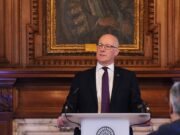




















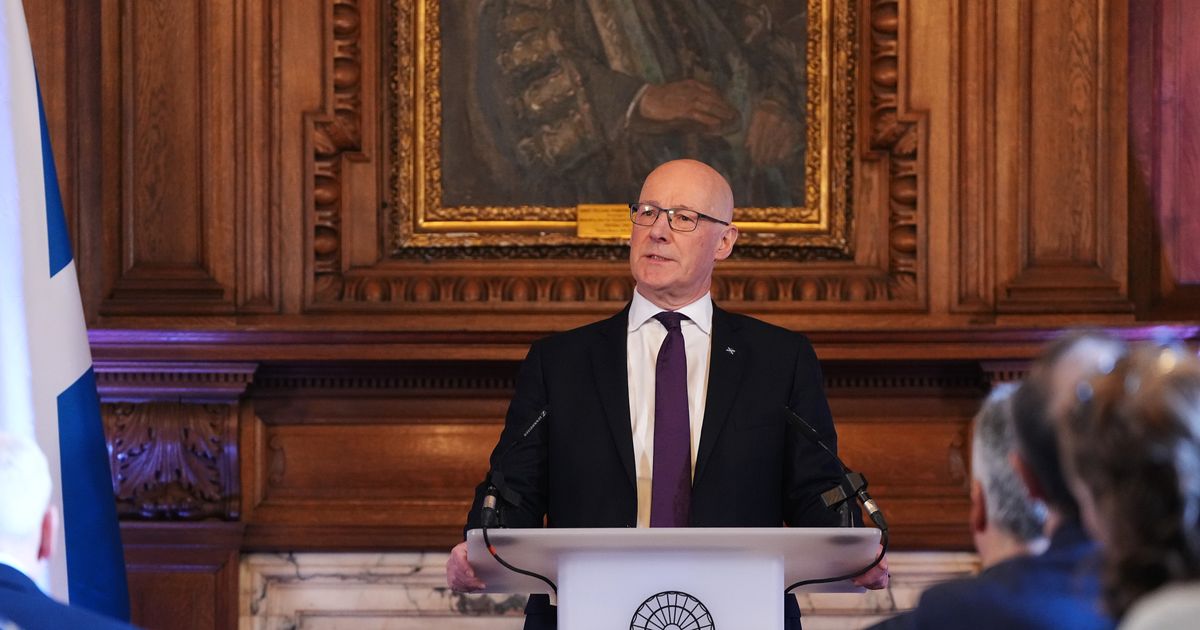
First Minister of Scotland John Swinney giving a speech on international affairs at McEwan Hall in Edinburgh.
Scotland’s First Minister Under Fire for Dodging Hospital Scandal Debate
The First Minister of Scotland, John Swinney, has come under intense criticism for avoiding a crucial debate about the Queen Elizabeth University Hospital (QEUH) scandal. Instead of addressing the concerns surrounding the hospital, which has been plagued by issues with contaminated water and ventilation systems, Swinney chose to spend two days in London and then deliver a speech on international affairs in Edinburgh.
Avoiding Scrutiny
Swinney’s decision to dodge the debate has been seen as an attempt to avoid scrutiny over the QEUH scandal, which has led to several deaths, including that of 10-year-old Milly Main in 2017. The Scottish Labour party had lodged a motion calling for the publication of all records related to the hospital’s construction, including documents about the contaminated water and ventilation systems. However, Swinney missed the debate, opting instead to discuss Scotland’s place in the world and its potential membership in the European Union.
Grandstanding on International Issues
Swinney’s speech in Edinburgh focused on Scotland’s international affairs, with the First Minister arguing that an independent Scotland would be able to defend its waters and shores. However, he refused to answer questions about how Scotland would defend itself outside of the UK and EU. Critics have accused Swinney of “grandstanding” on issues that are reserved for Westminster, in an attempt to distract from his government’s “pitiful record of failure” on domestic issues such as healthcare and the economy.
Criticism from Opposition Parties
The Scottish Conservative leader, Russell Findlay, has slammed Swinney’s actions, stating that the First Minister is “cosplaying as a global statesman” and that his attempts to distract from the QEUH scandal are “desperate and pathetic.” Findlay argued that the Scottish people expect their government to focus on the “day job” of addressing domestic issues, rather than trying to intervene in international affairs. The Scottish Tories have refused to participate in Swinney’s statement on the US taking custody of the captain of a Russian oil tanker, citing that it is a reserved issue for Westminster.
Implications of Swinney’s Actions
Swinney’s decision to avoid the QEUH debate and instead focus on international affairs has significant implications for the people of Scotland. The QEUH scandal has already led to several deaths and has raised serious concerns about the safety of patients in Scottish hospitals. By avoiding the debate, Swinney is seen as neglecting his responsibilities as First Minister and failing to address the concerns of the Scottish people. Furthermore, his attempts to grandstand on international issues may be seen as an attempt to boost his own profile, rather than addressing the pressing issues facing Scotland.
Historical Context
The QEUH scandal is not an isolated incident, but rather part of a larger pattern of issues with the Scottish National Health Service (NHS). The Scottish Government has faced criticism for its handling of the NHS, including long waiting times, staffing shortages, and inadequate funding. The QEUH scandal has highlighted the need for greater transparency and accountability within the Scottish Government, particularly when it comes to the NHS.
Conclusion
In conclusion, John Swinney’s decision to dodge the QEUH debate and focus on international affairs has been widely criticized. The First Minister’s actions have been seen as an attempt to avoid scrutiny and distract from his government’s “pitiful record of failure” on domestic issues. As the Scottish people continue to demand answers about the QEUH scandal, Swinney’s actions will only serve to further erode trust in the Scottish Government. It remains to be seen how the Scottish Government will address the QEUH scandal and the wider issues facing the NHS, but one thing is clear: the people of Scotland deserve better from their leaders.