



























Introduction to the Crisis
The United States is facing a critical moment in its history, with protests and riots erupting in cities across the country. At the heart of this turmoil is the Trump administration’s immigration crackdown, which has sparked widespread criticism and outrage. In an effort to address the situation, President Donald Trump has issued a new directive to Homeland Security Secretary Kristi Noem, instructing her not to intervene in protests in cities led by Democrats unless local authorities request federal assistance.
The Presidential Directive
On his social media platform, Trump stated that “under no circumstances are we going to participate in various poorly run Democrat Cities with regard to their Protests and/or Riots unless, and until, they ask us for help.” This statement has significant implications, as it suggests that the federal government will not take an active role in managing protests in cities with Democratic leadership unless explicitly requested to do so. However, Trump also emphasized that federal buildings will be protected “very powerfully” from attacks by “highly paid Lunatics, Agitators, and Insurrectionists.”
Impact on Federal Agencies
The president’s directive has raised questions about how it will affect the operations of U.S. Customs and Immigration Enforcement (ICE) and other federal agencies involved in immigration enforcement. While Trump did not provide detailed information on this aspect, he did instruct ICE and Border Patrol to be “very forceful” in protecting federal government property. This move is likely to exacerbate tensions between federal authorities and local governments, particularly in cities with Democratic leadership.
Deployment of Federal Forces
The Trump administration has already deployed the National Guard and federal law enforcement officials to several Democratic areas, including Washington, Los Angeles, Chicago, and Portland, Oregon. However, the latest directive comes as opposition to these tactics is growing, especially in Minnesota’s Twin Cities region. The presence of federal forces in these areas has been a source of controversy, with many arguing that it is an overreach of federal authority and an attempt to intimidate local communities.
Minnesota’s Twin Cities Region
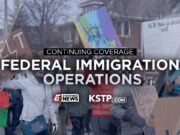
In Minnesota, the situation is particularly volatile, with a federal immigration enforcement surge sparking widespread protests and condemnation from state and local officials. Minnesota Attorney General Keith Ellison and the mayors of Minneapolis and St. Paul have challenged the DHS’s actions, arguing that they violate constitutional protections. A federal judge has refused to halt the enforcement operations, allowing the lawsuit to proceed while rejecting the Justice Department’s characterization of the lawsuit as “legally frivolous.”
Consequences and Implications
The Trump administration’s actions have serious consequences, both in terms of the immediate impact on local communities and the long-term implications for the country as a whole. The deployment of federal forces to cities with Democratic leadership has the potential to escalate tensions and create further divisions. Moreover, the administration’s willingness to use force to protect federal property raises concerns about the erosion of civil liberties and the potential for human rights abuses.
Historical Context
The current situation has historical parallels, with the deployment of federal forces to cities during times of civil unrest evoking memories of the 1960s and 1970s. The use of federal authority to quell protests and riots has often been controversial, with many arguing that it is an attempt to suppress dissent and maintain social control. In this context, the Trump administration’s actions must be carefully scrutinized, with a focus on ensuring that the rights of all individuals are protected and that the rule of law is upheld.
Expert Opinions and Future Implications
Experts are divided on the implications of the Trump administration’s actions, with some arguing that they are necessary to maintain order and protect federal property, while others see them as an overreach of authority and a threat to civil liberties. As the situation continues to unfold, it is essential to consider the potential long-term consequences of these actions, including the impact on community relationships with law enforcement, the erosion of trust in government, and the potential for further polarization and division.
Tom Homan’s Role
Tom Homan, the Trump administration’s border czar, has suggested that the administration could reduce the number of immigration enforcement officers in Minnesota if state and local officials cooperate. This proposal has been seen as an attempt to ease tensions in the region, particularly in the aftermath of the fatal shootings of two individuals by federal officers. However, it remains to be seen whether this offer will be accepted, and what the ultimate outcome will be for the people of Minnesota and the country as a whole.