
The hardest part of running your own media library is not the software. It is the four evenings you spend naming files, and nobody tells you that before you start.
I have done this twice now, and the second time was much faster because I knew where the hours go. Here is the honest version.
Start With What You Already Have
You need two things and you probably own both.
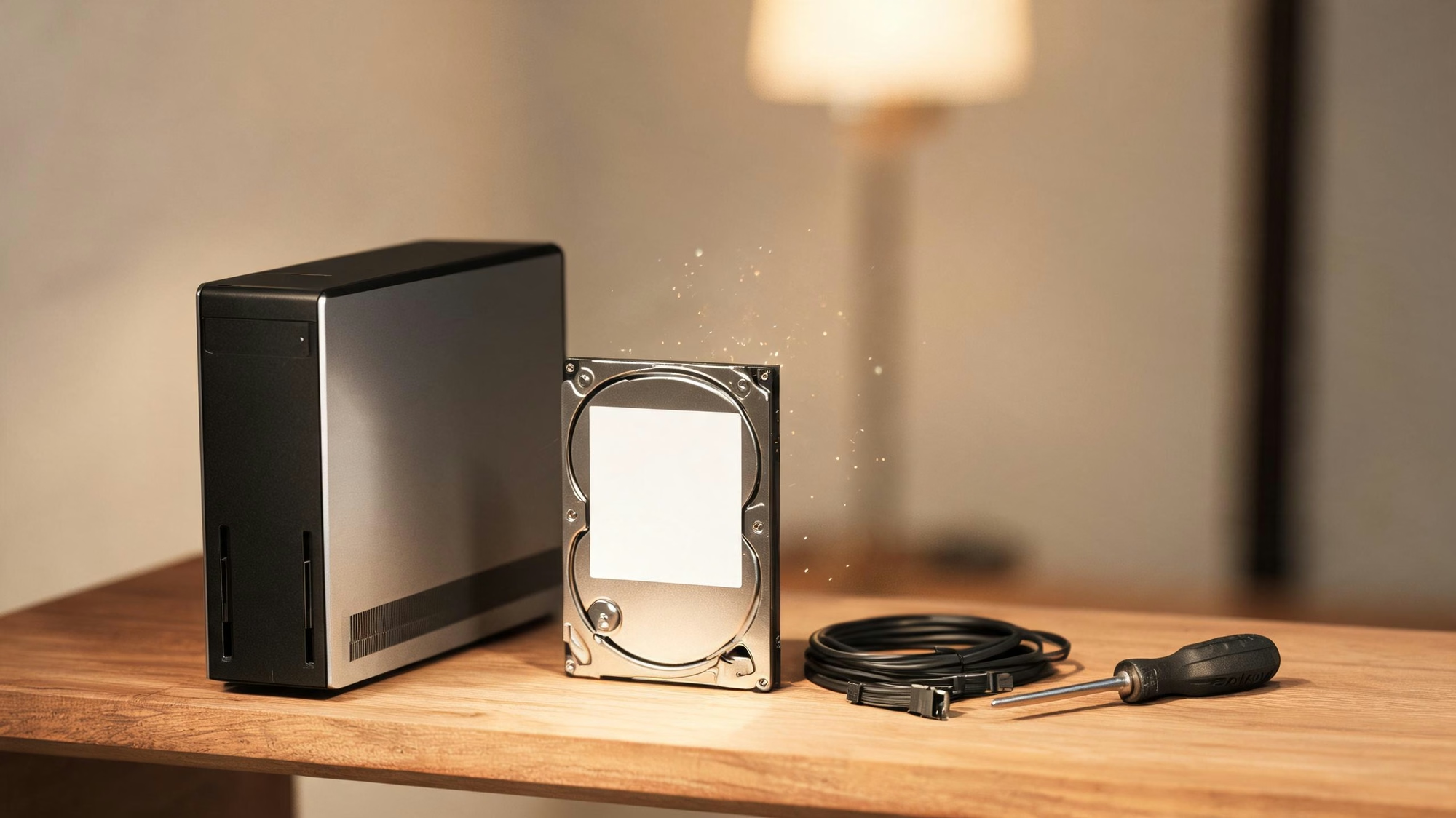
A machine that can stay on, which for me is a small office desktop I got free from a previous employer. And a drive big enough to hold a film collection, which for me is a six terabyte surveillance drive that was sitting unused in a drawer.
Neither is special. That is the point. A media server is the least demanding job in self hosting, and the hardware advice you will read assumes a workload you do not have.
The Drive Is The Whole Project
Everything about the experience is decided by the disk.
A rotating drive is fine for playback of a single film, because video is sequential and slow. It is not fine for scrubbing, generating thumbnails and running four things at once, which is why the first scan of a large library feels like watching paint.
Sizing is simple division. A two hour film at sensible quality is a few gigabytes. Six terabytes is a lot of films, more than most people will ever watch twice.
Keep the operating system on an SSD and the library on the spinning disk. That one decision removes most of the sluggishness people blame on the software.
Ripping Is The Boring Part
Here is where the hours go.
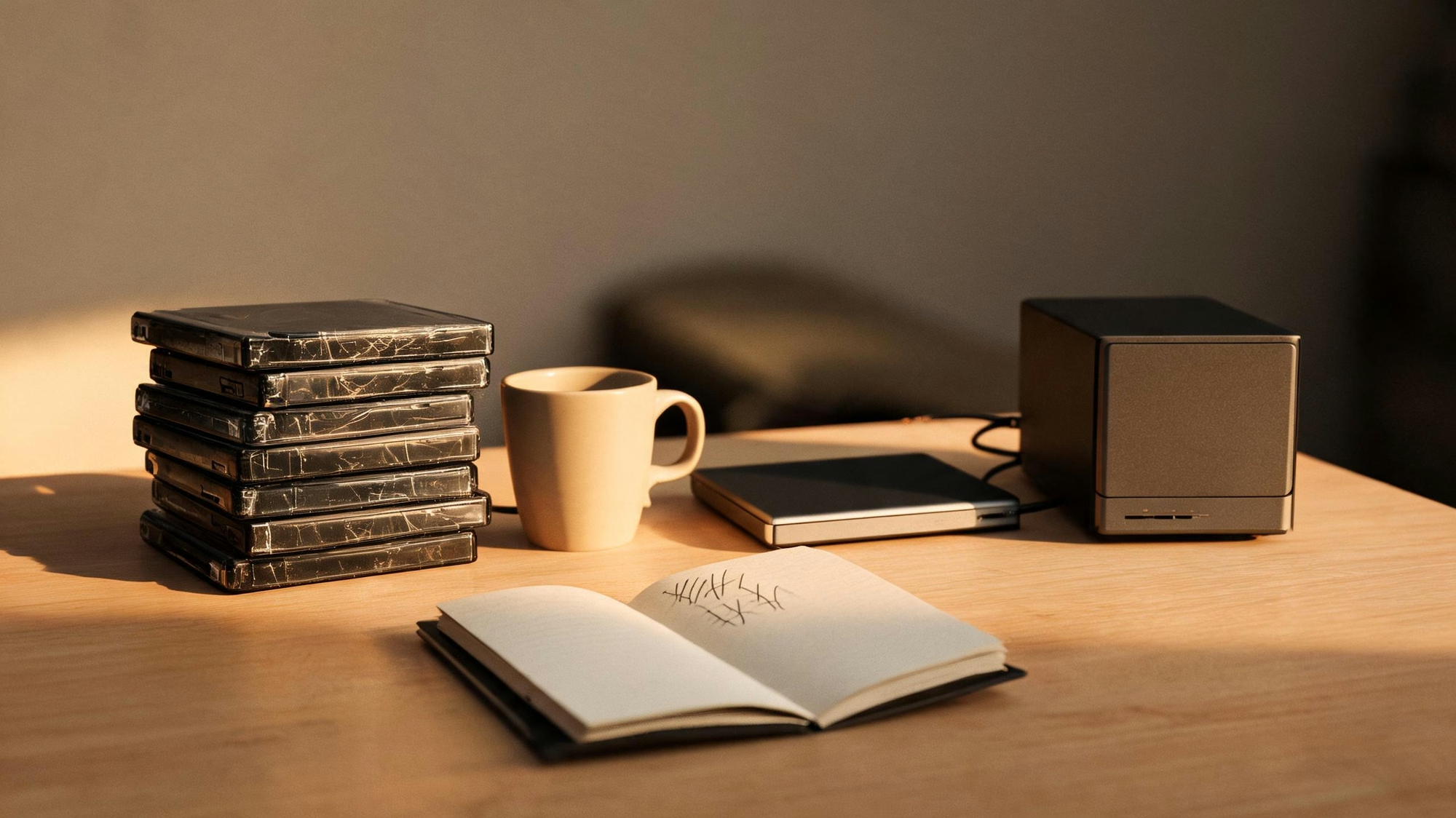
Ripping a disc takes as long as the film runs, and you cannot meaningfully speed it up without a faster drive. Twenty discs is an afternoon of background noise.
Which is why the practical approach is a batch. Load a queue, walk away, do something else, come back to a folder of files. Trying to rip two films while watching a third is how people decide this hobby is not for them.
You can run it on the same machine that serves the library. The transcoder and the ripper do not fight over the drive if you stagger them.
Naming Files Like A Machine
The scraper is the part that makes a library feel like a service, and it works by guessing.
Give it the name and the year and nothing else. A folder per film, containing a file with the same words, is the shape it expects. Extra punctuation, release tags and scene junk in the filename confuse it into matching the wrong film or nothing at all.
When a match fails, the fix is usually the year. Two films share a title far more often than you would guess, and the year is the only thing that separates them.
Subtitles Will Humble You
Subtitles are the step people quit on. A file with no subtitle track is a file you cannot watch with anyone who needs them.
The server can fetch subtitles from public databases with a plugin, and it does a decent job. Expect to fix a few by hand, expect timing to drift on some rips, and expect it to be worth it.
Serving It To Every Screen
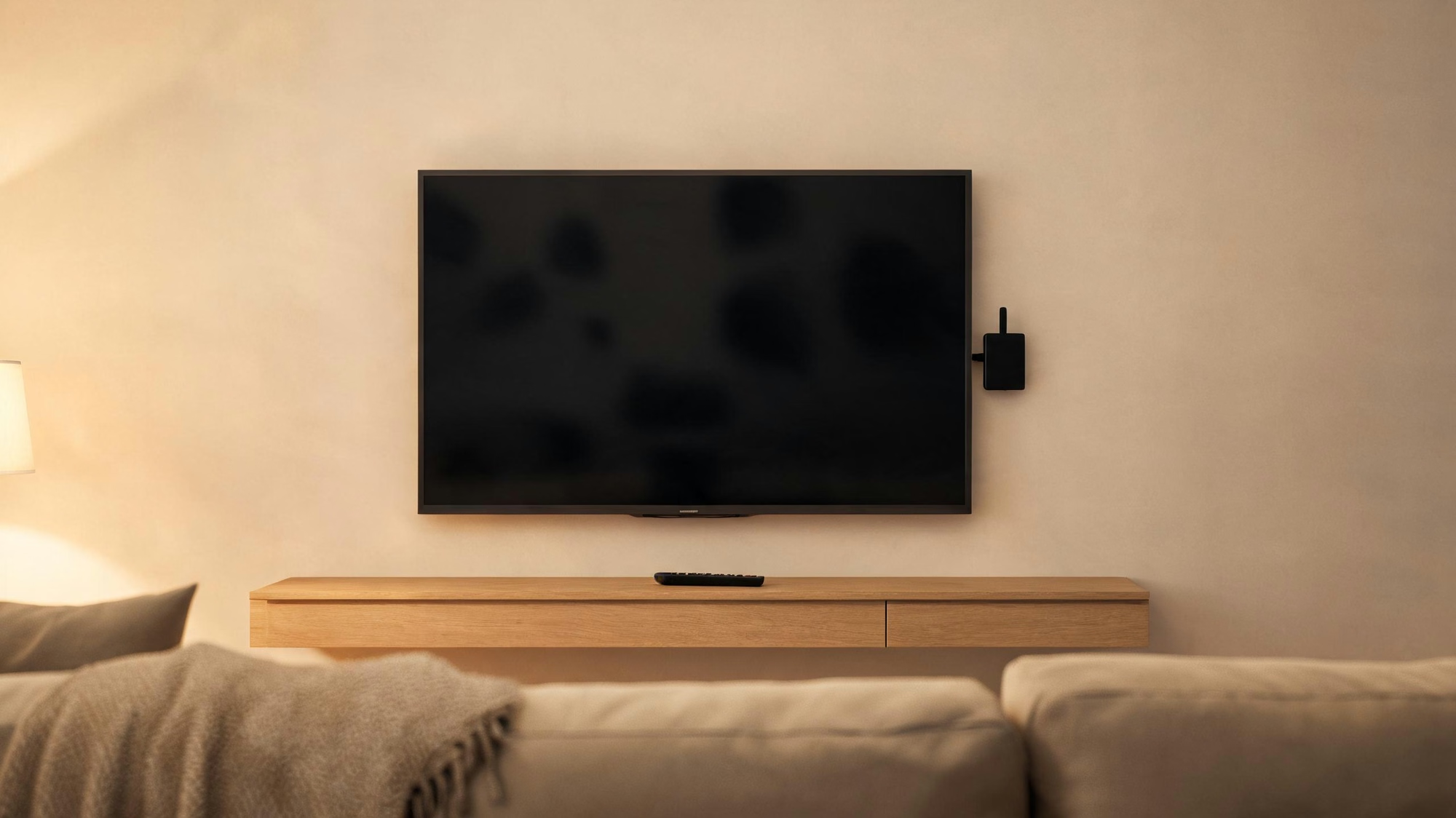
This is the part that surprises people who have only used a shared folder.
A media server gives you a proper interface with posters, descriptions and resume points, on the television, the phone and the browser. It also gives you transcoding, which means the server converts a file the television cannot play into one it can.
That conversion is the only thing that will make a small machine sweat. If the box has Intel graphics, and most office desktops do, hardware transcoding takes the load off the processor entirely.
What Breaks At Two In The Morning
Three failures, and they are always the same three.
The film will not play on one device but works on another, which is a codec the player cannot handle and a transcoder refusing to help. The drive fills up, because nobody deletes anything. Or the library scan rebuilds itself and every poster disappears for an hour.
None of these destroy data. They are annoying, not fatal, and each one is a settings page away from fixed.
The Hours Nobody Counts
Let me put a number on it, because the articles never do.
Software installation is an evening. Ripping a collection is measured in days of background time. Naming and fixing matches is an hour per dozen films, and subtitles are another afternoon.
Call it a weekend to get to a library that feels finished, and then almost nothing to maintain it. That is the whole trade, and it is a real one.
The Library You Keep
The reason to do this is not free films. It is that the interface is yours, the library does not lose titles because a licence expired, and the machine serving it costs nothing.
You already own the hardware. Put the drive in, spend the weekend naming things, and stop renting a shelf you will never own.
Anything you rip should be something you already own, and what that permits varies by where you live. Check your own rules before you start.